Click to see the video

7/18/11
July 18, a.D. 1870 Dogmatic Definition of Papal Infallibility

"We teach and define that it is a dogma Divinely revealed that the Roman pontiff when he speaks ex cathedra, that is when in discharge of the office of pastor and doctor of all Christians, by virtue of his supreme Apostolic authority, he defines a doctrine regarding faith or morals to be held by the universal Church, by the Divine assistance promised to him in Blessed Peter, is possessed of that infallibility with which the Divine Redeemer willed that his Church should be endowed in defining doctrine regarding faith or morals, and that therefore such definitions of the Roman pontiff are of themselves and not from the consent of the Church irreformable.
So then, should anyone, which God forbid, have the temerity to reject this definition of ours: let him be anathema."
7/17/11
Burial of His Imperial Highness, Archduke Otto von Habsburg
Yesterday, July, 16 2011 took place the funeral of Otto von Habsburg, the son of blessed Charles I of Austria and the Crow Prince of Austro-Hungary.
There took also place the traditional entombment ceremony ‘source Wikipedia’:
‘A traditional ceremony during the funeral is when the procession of mourners arrives at the gates of the Capuchin Church in Vienna, under which the Imperial Crypt lies, and the Herald knocks on the door. A Capuchin then asks "who demands entry?" The Herald responds with the name and title of the deceased. The Capuchin then responds "we don't know him/her." The same procedure is repeated once. Only on the third attempt, when the Herald responds with "a sinful, mortal human being", the gates are opened and the dead Habsburg admitted into the Crypt. In 1989, Otto's mother, Zita, was first introduced with all her titles, and the second time introduced as "Zita, Her Majesty the Empress and Queen".
Ulrich-Walter Lipp, a lawyer and friend of the family, was chosen to be the Herald in 2011. Otto was first introduced as "Otto of Austria; former Crown Prince of Austria-Hungary; Prince Royal of Hungary and Bohemia, of Dalmatia, Croatia, Slavonia, Galicia, Lodomeria, and Illyria; Grand Duke of Tuscany and Cracow; Duke of Lorraine, of Salzburg, Styria, Carinthia, Carniola and Bukowina; Grand Prince of Siebenbürgen, Margrave of Moravia; Duke of Silesia, Modena, Parma, Piacenza, Guastalla, Oświęcim and Zator, Teschen, Friaul, Dubrovnik and Zadar; Princely Count of Habsburg and Tyrol, of Kyburg, Gorizia and Gradisca; Prince of Trento and Brixen; Margrave of Upper and Lower Lusatia and Istria; Count of Hohenems, Feldkirch, Bregenz, Sonnenburg etc.; Lord of Trieste, Kotor and Windic March, Grand Voivod of the Voivodeship of Serbia etc. etc."
The second time he was introduced as "Dr. Otto von Habsburg" and a number of his civic achievements, notably as President of the Paneuropean Union and Member of the European Parliament, mentioned. "Otto Habsburg-Lothringen", the name Austrian authorities use when referring to him, was not used.
The third time he was introduced as "Otto, a mortal, sinful human being!"
The Capuchin opening the gates was Father Gottfried Undesser, the custodian of the Imperial Crypt. It was also Father Gottfried who opened the gates for Empress-Queen Zita in 1989. Father Gottfried (born 1933) has been a Capuchin since 1951. The Capuchins have been in charge of building and maintaining the Imperial Crypt since 1622.
This was the last time this ceremony was performed at the gates of the Capuchin Church.’
There took also place the traditional entombment ceremony ‘source Wikipedia’:
‘A traditional ceremony during the funeral is when the procession of mourners arrives at the gates of the Capuchin Church in Vienna, under which the Imperial Crypt lies, and the Herald knocks on the door. A Capuchin then asks "who demands entry?" The Herald responds with the name and title of the deceased. The Capuchin then responds "we don't know him/her." The same procedure is repeated once. Only on the third attempt, when the Herald responds with "a sinful, mortal human being", the gates are opened and the dead Habsburg admitted into the Crypt. In 1989, Otto's mother, Zita, was first introduced with all her titles, and the second time introduced as "Zita, Her Majesty the Empress and Queen".
Ulrich-Walter Lipp, a lawyer and friend of the family, was chosen to be the Herald in 2011. Otto was first introduced as "Otto of Austria; former Crown Prince of Austria-Hungary; Prince Royal of Hungary and Bohemia, of Dalmatia, Croatia, Slavonia, Galicia, Lodomeria, and Illyria; Grand Duke of Tuscany and Cracow; Duke of Lorraine, of Salzburg, Styria, Carinthia, Carniola and Bukowina; Grand Prince of Siebenbürgen, Margrave of Moravia; Duke of Silesia, Modena, Parma, Piacenza, Guastalla, Oświęcim and Zator, Teschen, Friaul, Dubrovnik and Zadar; Princely Count of Habsburg and Tyrol, of Kyburg, Gorizia and Gradisca; Prince of Trento and Brixen; Margrave of Upper and Lower Lusatia and Istria; Count of Hohenems, Feldkirch, Bregenz, Sonnenburg etc.; Lord of Trieste, Kotor and Windic March, Grand Voivod of the Voivodeship of Serbia etc. etc."
The second time he was introduced as "Dr. Otto von Habsburg" and a number of his civic achievements, notably as President of the Paneuropean Union and Member of the European Parliament, mentioned. "Otto Habsburg-Lothringen", the name Austrian authorities use when referring to him, was not used.
The third time he was introduced as "Otto, a mortal, sinful human being!"
The Capuchin opening the gates was Father Gottfried Undesser, the custodian of the Imperial Crypt. It was also Father Gottfried who opened the gates for Empress-Queen Zita in 1989. Father Gottfried (born 1933) has been a Capuchin since 1951. The Capuchins have been in charge of building and maintaining the Imperial Crypt since 1622.
This was the last time this ceremony was performed at the gates of the Capuchin Church.’
7/16/11
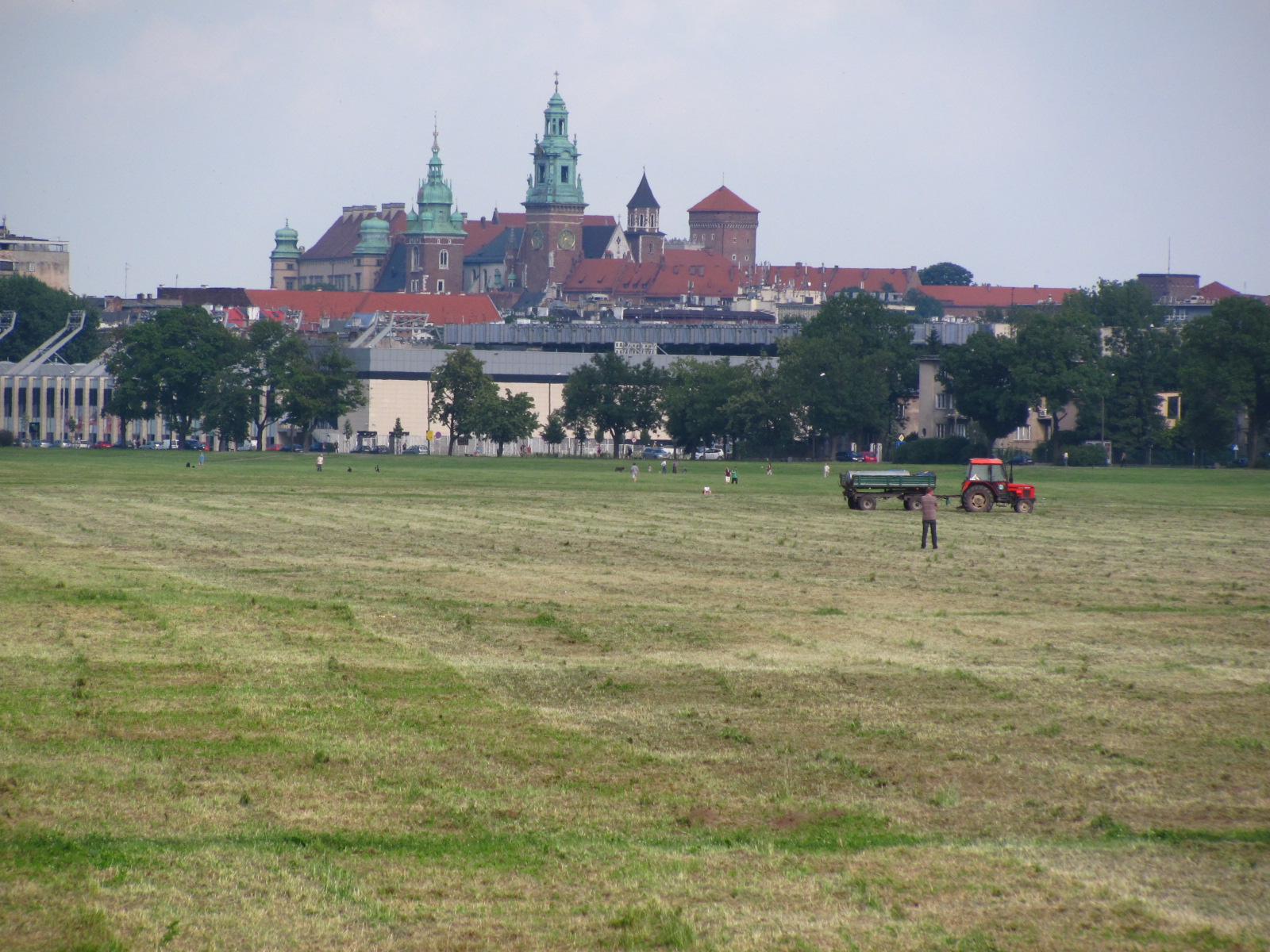
Hermitage in Krakow


There is an extraordinary place in Krakow, where for over 400 years generations of monks have been praying for the salvation of souls, exaltation of Holy Mother Church, Poland and the city of Krakow.
The monastery is the Priory of Camaldolese - Congregatio Eremitarum Camaldulensium Montis Coronae. The rule of Camaldolese is one of the most strict among the Catholic Orders.
The women can visit the monastery only during 12 main feasts in year.
The women can visit the monastery only during 12 main feasts in year.
Our Lady Queen of Hermits

Miraculous Image of Our Lady in the Camaldolese monastery in Krakow
REGINA EREMITARUM - ORA PRO NOBIS
In Pace Seputa Sunt

Corpora ipsorum in pace sepulta sunt | Their bodies are buried in peace |

6/29/11
Pope Benedict's 60th Anniversary of Priestly Ordination June, 29
Freizing, Bavaria Germany, June 29, 1951
READ MORE HERE:
Priestly Ordination of future Pope – video
Priestly ordination 1951
Cathedralis Ecclesiae Frisingensis
Cardinal von Faulhaber's vestments
'You are on the right path'
Where did the Pope celebrate his first Mass?
EXTERNAL SOURCES:
NLM - A New Priest in 1951 - Part I
NLM - A New Priest in 1951 - Part II
NLM - Video of the Holy Father's Ordination to the Priesthood
American Bishops organize celebration for pope's 60th anniversary as ordained priest
news.va - The most important moment of my life - Sixty years ago, 29 June 1951, Joseph Ratzinger was ordained a priest
In German:
„Höhepunkt des Lebens“Die Ratzinger-Brüder feiern ihr sechzigjähriges Priesterjubiläum
6/27/11
Pontifical Ceremonies on Pictures
A polish website Nowy Ruch Liturgiczny (New Liturgical Movement) has posted a set of 151 illustrations from the 19th century Pontificale Romanum – a book which contains the rites for the performance of episcopal functions. This exemplar was issued as Pontificale Romanum Summorum Pontificum jussu editum et a Benedicto XIV. Pont. Max. recognitum et castigatum in 1848 in three parts with appendix.
On the pictures you can see ceremonies reserved for a bishop that mostly today cannot be seen in the real life like: benediction and coronation of a king, blessing of a new knight, reconciliation of public penitents.
![]()
On the pictures you can see ceremonies reserved for a bishop that mostly today cannot be seen in the real life like: benediction and coronation of a king, blessing of a new knight, reconciliation of public penitents.
See HERE

Church consecration
6/24/11
Prudentes Virgines


Corpus Christi Procession, Warsaw a.D. 1957
Adducentur Regi virgines post eam: proximae eius afferentur tibi in laetitia. Specie tua, et pulchritudine tua intende, prospere procede, et regna. | After her shall virgins be brought to the King: her neighbors shall be brought to Thee with gladness. With thy comeliness and thy beauty set out, proceed prosperously, and reign. |


6/19/11

6/16/11

Liturgical Vestments

Chasubles

Dalmatics

Burses

Stoles

Antepediums


'Veneremu Cernui'

When you ask in old churches were are the traditional liturgical vestments, you often here that there are no anymore. In fact most of them, together with the old liturgical books, ended up heating the parish houses in winter.
Here you can see some vestments saved for the future generations.
6/13/11
Litany of Polish Saints: John Sarkander

One of the greatest martyr of the Holy Church. Killed by the Hussites, because he did not want to reveal the secrets of the confession

Painting of saint John on the city hall tower in Skoczów


Read his short biography HERE
Procession to Honor of Saint John Sarkander

Local bishop welcomed by the parish rector at the entrance to the church

‘Ecce sacerdos magnus' sung by the parish choir

Procession from the parish church to the Kaplicówka hill

Fraternities banners

Polish sisters: always ready, pious, beautiful, giving good example

Relicts of the martyr

Populus fidelis

The Cross and the chapel on the Kaplicówka hill
Each year in June the little town in the south Poland - Skoczów - honors its greatest citizen and witness of the faith saint martyr John Sarkander. Many people come to Skoczów to take part in the procession and the Holy Mass led by the local bishop.
Subscribe to:
Posts (Atom)